Monday, 30 September 2013

2D Design: Disciplines [1]

2D Design is associated with many Art, Design and Creative Media disciplines within the Industry such as:-

Illustration - Includes digital work, character design, Editorial work, Comics, Children's books, Non-fiction sketches, Prints, Use of line and tone, storyboards, use of collage and drawing.
Graphic Design - Includes Advertising, Editorial design, packaging, logos, signage, book covers, promotions (point of sale), Brochures and leaflets, website design, maps, typography (fonts/sizes), Flash, IOS.
Surface Pattern/Textiles - Includes Materials, Fabric, texture, knit, colour and mood boards, print making, repeat patterns, stitch, floor/wall paper/tile, weaving, patchwork, applique, embroidery.
Animation - Includes flash, 3D, 2D, stop motion, flick books, zoetrope, digital, game/design, marionettes, storyboard, special effects, film, advertising.

2D Design: Research [3]

- Stefan Sagmeister


'Casa Da Musica Book'

Really like the fine bold line above the smoother lines behind enabling this 3D element to appear on the cover. Both the gray-scale version and the coloured work really well. The darker background on the grayscale side really makes the object on the cover stand out above the layer.


'Art of Oubey'

Love the introduction of the 3D element into this book design for German artist, Oubey. I have no idea what I like the solid colour pages in relationship with the colourless cover of the book but they seem to work really well. having that introduction of the colour on the first page makes me want to carry on and explore since its pretty dull on the outside, but starts to get more interesting when it is opened.


Sunday, 29 September 2013

iMAGES.
Joint Group Project 19-20th September
Personal Project 16-23rd September
Word Associated Project 23rd-27th September


----------------------------------------------------


------------------------------------------------


--------------------------------------------------


Sunday, 22 September 2013

Homage to Artist, Santiago Calatrava.

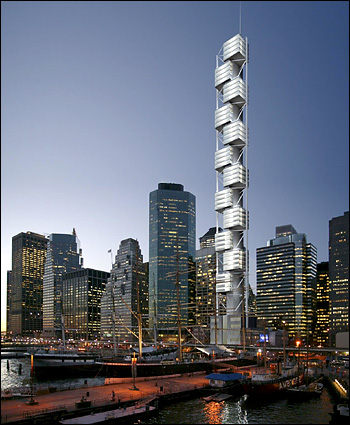
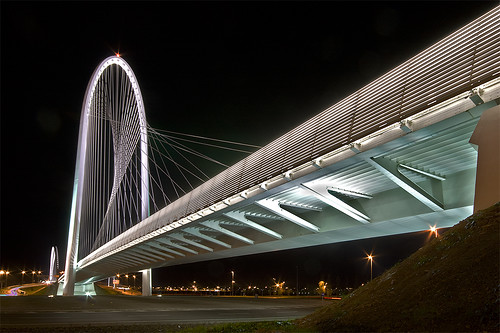
Santiago also produces work, building designs etc, which appear as a spiral, and is something I also like about him so in response to such works like the Peace Bridge and 80 South Street Housing in New York ( first image ), I wanted to carry on that sense of spiraling with more twisted sections as work such as The Oriente Station ( second image ) in Lisbon where there are alot of repeated patterns.


mETHOD.
Below are some prototypes for the shape on a smaller scale, the actual is around 1/5 wider and longer. Each section is made up of right angled triangles folded on top of each other with a crafting knife. Each section has to be measured exactly, in these quick mock ups they're roughly 5cm across and the length of the paper the other way, as this 3D object is made of a long slender sheet. Things I noticed when creating this pattern was the proneness for the paper to split in certain places and if the measurements are exact, it creates uneven fittings and a gap in the center grows larger. This piece is mainly a response to the Peace bridge in the previous post. maintaining this monochrome shape which is continuously repeated sections with spiraling elements. This Prototype below also has a internal wire structure making it able to be stable, standing alone.

 
Prototypes for Triple Helix Response Piece.

Certain areas, especially between my helix piece open due to the twisting, to counter this, I'd joined certain areas together, to prevent holes and improve the flow of the twisting. This is partially inspired by the Twist Photography re-uploaded below.

iMPROVEMENT.
I'm mostly happy with the outcome but if i was to redesign this response, I would like to maybe involve colour. An interesting image i found which is below, does this. Shapes are also circular which could be nice to experiment with. The fact that placing light sources inside to make colours more vibrant was something that really stood out for me and could be adapted to my response pretty well.

Alternatively,  I could use stronger materials to prevent splitting at any of the points of the helix. Stronger card as the method I use to create the flat shapes needed, involves a crafting knife which makes indents in the material, weak joints although overall, the form of my object is strong. It would just make the overall finish alot nicer.

oTHER.
Through creating the newer revised object. I've discovered that by fixing gaps within the structure has eliminated the use for wire to maintain the shape of the helix and preventing it losing shape and expanding. Although would still require it to stand up. So I've adapted a singular length of wire with a spiral bottom to act as a stand for being a standalone piece.


Saturday, 21 September 2013


Contextual Studies Assignment - 3D, Design & Applied Art

As i'm a fan of the stranger side of the spectrum of design, Architect Santiago Calatrava stands out for me due to his bridge designs, mainly the Peace bridge, which is now built in Calgary city. Something I like about this work is how there are some sections covered with glass so rain water is kept out and due to the shape, can then slide of into the waters below. Some areas are also exposed, leaving it open to peer out over the water. the simple monochromatic color scheme is another thing I like, just a red finish which made it quite effective for me. all the repeated sections are pretty much perfect as it holds this repeating pattern throughout its structure.

I dislike the curvature of the bridge, I would of liked to see it with more curvature. Another bridge which links the land to another is the Samuel Beckett bridge in Dublin, I admire this structure due to the shape of the support of the cables on the bridge, this brilliant white curve rising up. I also found how the bridge doesn't follow the mirrored image which a traditional bridge would, one side is different to the other. Its overall shape reminds me of a harp. although the bridge itself is only a single color  it works well as just  that, as i would think an introduction of another could ruin the simplicity of the bridge.


Another Artist I looked into was 'Ron Arad' a Israeli industrial designer, artist, and architect. He also follows this monochromatic colour scheme, like in his Furniture designs, but unlike Santiago, they have more of a chaotic composition. The misfits seating image below is a sofa which is constructed from parts but shape is completely irregular and doesn't have a general pattern, but kind of flows in places, like at the base of the seat, although partly elevated from each-other, they sort of connect. There is also similar qualities in the piece of furniture involving cube shapes, like pixels. That chaotic composition yet it seems to fit really well.


Thursday, 12 September 2013


"Ahoy! Welcome to My Blog"
Photography of my Connection Task.
(Involving 'Twist' and 'Loop')

Loops (Patterns and Drawn images)

Twist (Creating Patterns)

Twist I

Twist II